This article was updated on November 4, 2026.
A content creation agent is AI software that prepares blog posts, product descriptions or social media copy according to the rules, brand knowledge and goals you define. It speeds up production and makes it easier to keep your content calendar full. On its own, however, it does not guarantee rankings or sales. The best results come when you combine the agent's speed with human oversight and brand-specific knowledge.
What is a content creation agent?
A content creation agent is a system powered by advanced language models that carries out a specific content task in a repeatable way. It can work in different formats, such as blog post drafts, product descriptions, campaign copy or social media posts.
What sets it apart from an ordinary chat assistant is that it is configured. Brand voice, product information, banned phrases and content templates are defined once, and the agent follows them every time it produces something.
What has changed since 2025?
The first version of this article was published in April 2025. The core idea still holds, but a few things have changed.
- The agent concept has matured. Platforms like Jasper no longer position themselves as tools that generate text piece by piece. They now present themselves as systems offering purpose-built agents that run marketing workflows end to end. Jasper argues that these agents should work under human oversight and support marketers rather than replace them.
- Adoption has spread, but proving results has become harder. According to Jasper's 2026 survey of 1,400 marketers, 91% of marketers use AI in their work. In the same survey, the share who say they can easily prove AI's return on investment dropped to 41%. Because this is a software vendor's own survey, the results should be treated with caution. Still, it points in a clear direction: using a tool is not enough on its own, you also need a process and measurement.
- Google's position has become clearer. The details are in the section below.
Advantages of content creation agents
Time savings
An agent can produce headline ideas, intro paragraphs or draft articles within minutes. For small teams, the real gain is not having to start from a blank page and being able to fill the content calendar consistently.
Support for SEO work, not a guarantee
Agents make it easier to prepare drafts for things like heading structure, meta descriptions and keyword usage. But the expectation that "AI wrote it, so my rankings will rise" is wrong. Google is clear on this: using AI gives content no special advantage, and in the end it is only the content that counts. What determines rankings is whether the content is original, helpful and trustworthy.
Multilingual content
An agent can adapt your existing content into other languages or produce multilingual drafts directly. This is useful for SMEs that export. Even so, a native speaker should review the translation, because product names, units of measurement and legal wording can come out wrong.
Data-driven topic selection
If you feed the agent search data, customer questions and order notes as input, the content will focus on topics your target audience is actually searching for. The more real and brand-specific the input, the more original the output.

What does Google say about AI-generated content?
Google does not ban the use of AI, but it does look at why it is being used.
- Appropriate use of AI and automation does not violate Google's guidelines.
- Using automation to manipulate search rankings violates its spam policy.
- Producing large numbers of pages without adding value for users may violate its "scaled content abuse" policy.
The most important emphasis in the current version of the guidance is verification. Google states that AI output can contain false information and that manually checking all AI content before publishing is critical. According to Search Engine Journal, this review also covers headings, alt text and other metadata. In other words, you need to check not only the body of the article but also the title tags the AI generates.
An additional rule for e-commerce businesses
If you have agents write your product descriptions, pay attention to the Google Merchant Center rules. According to Google, data such as AI-generated product titles and descriptions must be specified separately and labeled as AI-generated. AI-generated images must carry the IPTC DigitalSourceType TrainedAlgorithmicMedia metadata. For stores that update thousands of products in bulk, this is a step that needs to be planned into the process from the start.
The current state of popular content creation tools
Tool features and prices change often. Check the vendor's current page before you use any of them.
- ChatGPT: A general-purpose AI assistant. It is a flexible starting point for generating text, ideas and drafts.
- Jasper: Describes itself as a platform built for marketing, offering marketing agents, team-scale content pipelines and enterprise governance controls. It is aimed mainly at marketing teams.
- Copy.ai: It was announced in October 2025 that Copy.ai had been acquired by Fullcast. Since then, it is more accurate to see Copy.ai as a platform positioned around sales and marketing workflows.
In the earlier version of this article, we listed these three tools side by side. Today the question has shifted from "which one writes better?" to "which one fits my workflow?"
Human + AI: the balance that works
The best content comes from combining AI's speed with human contextual knowledge. The agent prepares the draft. A human adds brand knowledge, customer experience, current pricing and local detail.
Jasper also points out the risk of unsupervised production: as content creation becomes nearly unlimited, "AI slop" is a growing risk for brands without a governance system. In short, the goal is not to produce a lot of content but to produce accurate, useful content.
How to set up your own content agent process
- Define the purpose. Set separate goals for blog posts, product descriptions and social media.
- Gather brand knowledge. Tone of voice, banned phrases, product information and frequently asked questions should be the agent's input.
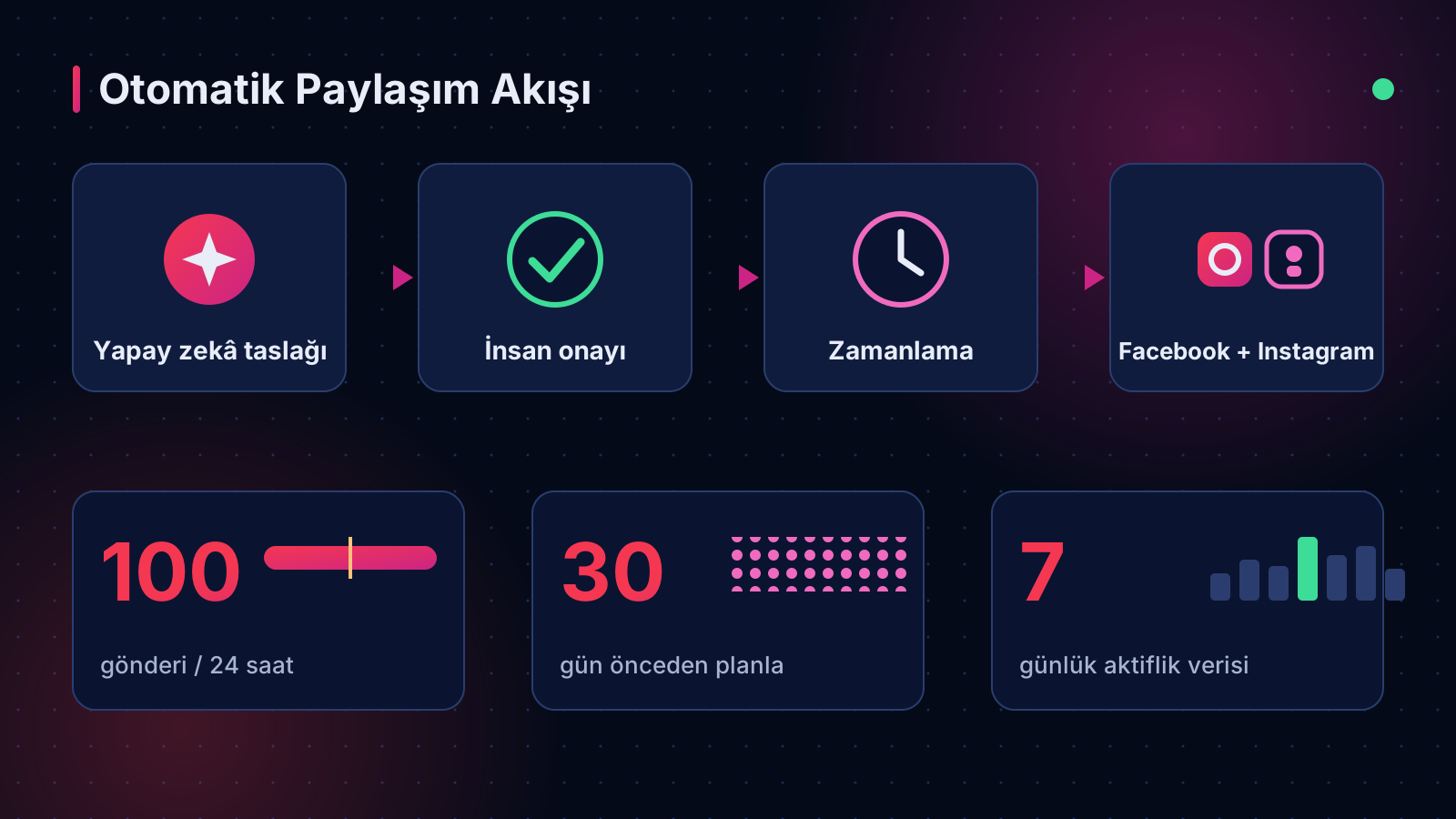
- Separate drafting from publishing. Let the agent produce drafts only, and have an editor make the publishing decision.
- Use a verification checklist. Check figures, sources, product specifications, titles and meta descriptions by hand.
- Follow the labeling rules. In e-commerce, mark AI-generated product data according to Merchant Center rules.
- Measure the result. Track traffic, conversions and time on page, and don't scale up content that doesn't work.
What does Medyateji recommend?
For content creation, we recommend setting up AI not as a shortcut but as a regular production line. In our AI agent and automation work, we design content agents that match your brand's voice and fit your workflow. If you are not sure where to use AI, you can start by building a roadmap with AI Strategy (Straiteji). For your content's visibility in search engines, our SEO service comes into play.
As a hybrid agency, Medyateji works on a turnkey basis: the scope of work, timeline and fee are clear from the start. There are no contracts or surprise fees, and our prices are published online. For example, AI services start from 10,000 TL and SEO starts from 20,000 TL.
Frequently asked questions
Does Google penalize AI-generated content?
No, using AI alone is not a reason for a penalty. Google considers automation a spam policy violation when it is used to manipulate rankings or to produce large numbers of pages without adding value.
What is the difference between a content creation agent and ChatGPT?
ChatGPT is a general-purpose assistant. A content creation agent is configured with brand knowledge, rules and a workflow, so it can carry out a specific content task in a repeatable way.
What should I do before publishing content written with AI?
Manually check the facts, figures and meta fields such as titles and alt text. Google describes this manual verification as critical.