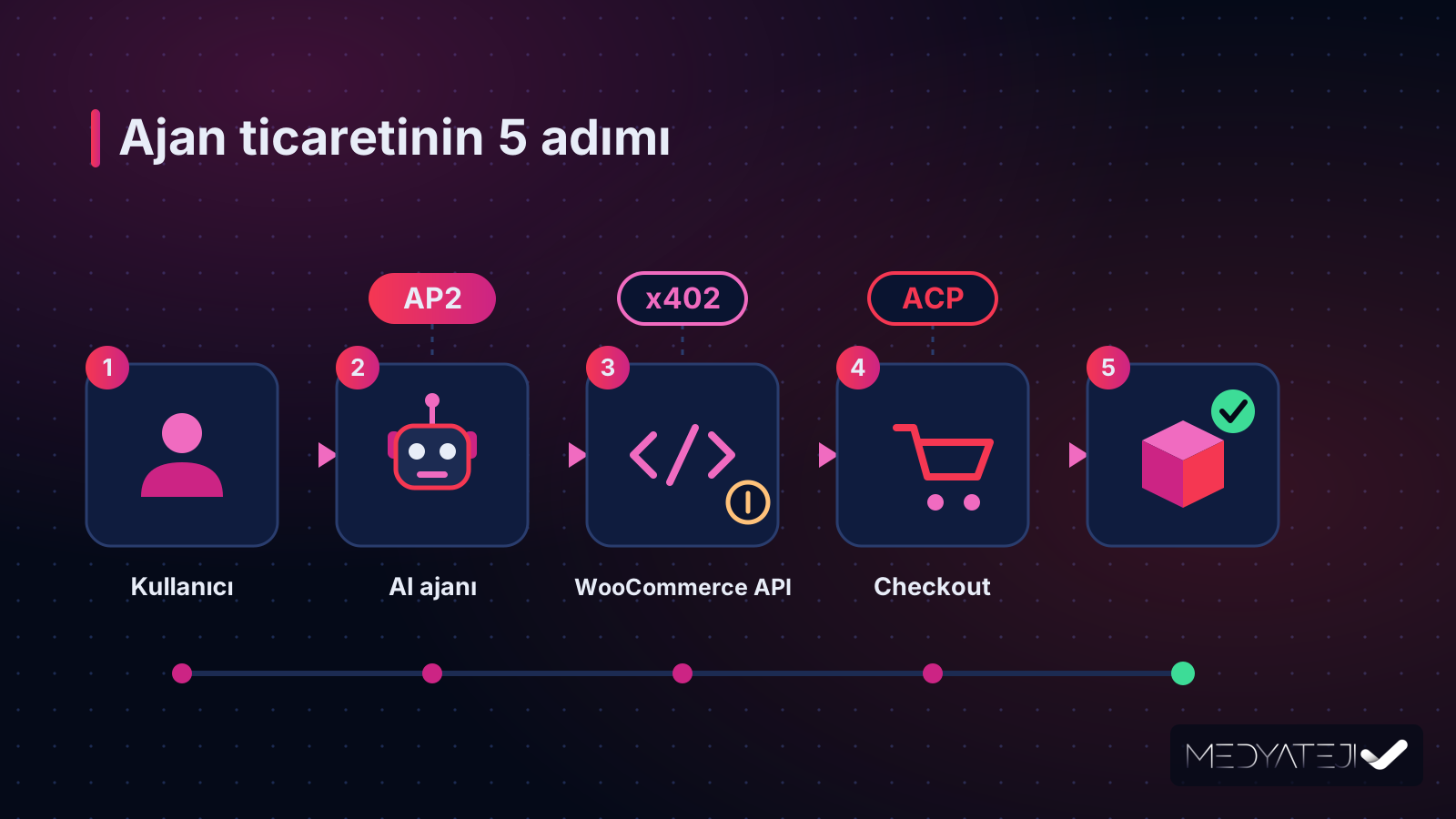
AI automation for e-commerce is set up by identifying repetitive tasks (customer questions, order tracking, product content, inventory and reporting) and running them with AI agents and automation scenarios connected to your store infrastructure. Your in-house team, an independent specialist, or an agency can build it. Medyateji takes on the work turnkey, meaning the scope, timeline and fee are clear from the start.
What is AI automation in e-commerce?
AI automation means handing over the work that people do manually, over and over, in an e-commerce business to software and AI-supported workflows. The goal is not to shrink the team, but to free up its time for sales, customers and strategy.
Typical use cases include:
- Answering customer questions and order status requests
- Preparing product titles, descriptions and category content
- Syncing inventory, price and order data between systems
- Collecting and reporting sales and advertising data
- Following up on sales opportunities such as abandoned carts
How do you set up AI automation for e-commerce?
The right order is to understand the work before choosing a tool. The steps below suit most stores.
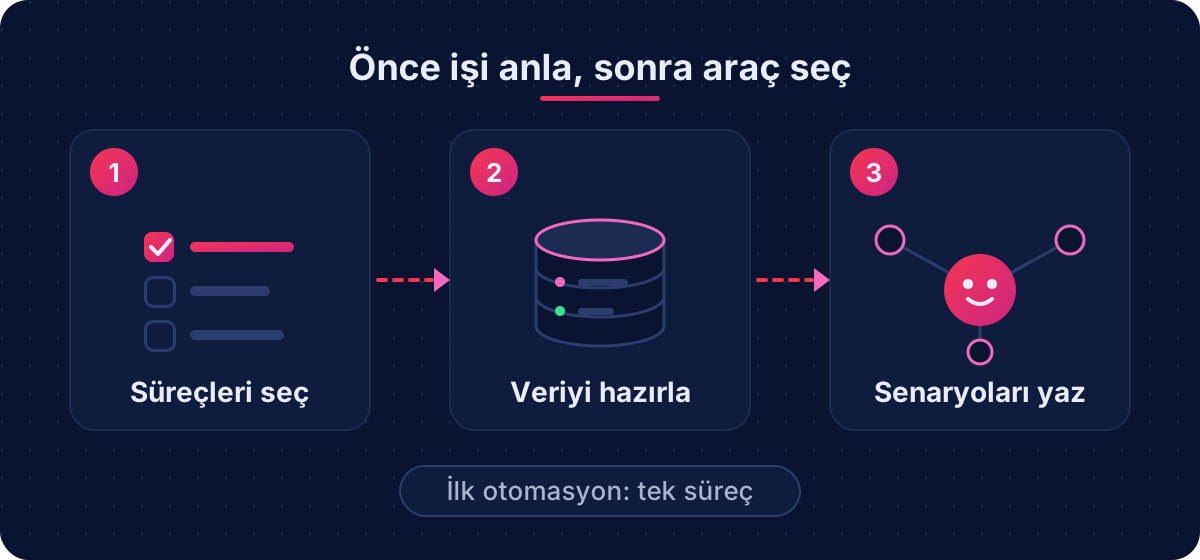
1. Map and prioritize your processes
List the tasks where your team spends the most time, which repeat most often and which are most prone to errors. Pick one of them for your first automation. Trying to automate everything at once often slows the project down.
2. Prepare your infrastructure and data
Automation works best with well-organized data. Product information, order records and customer communication channels should be brought together in one structure. It is also crucial that your store infrastructure can communicate with external systems.
3. Define scenarios and AI agent tasks
Write down what should happen in each situation: "When an order is placed, send this information here," or "When a customer asks about shipping, the assistant should check this data and reply." AI agents can be thought of as digital workers with defined limits who take on specific tasks in these scenarios.
4. Test it and keep human oversight
Run a new workflow on a limited scope first. For sensitive matters (returns, payments, complaints), keep human approval in place. Catching errors early is cheaper than fixing them later.
5. Measure and expand
Use your own data to track how the automation affects time spent, the number of errors and customer response time. If the results are positive, move on to the next process.
Who sets up AI automation for e-commerce?
There are three options:
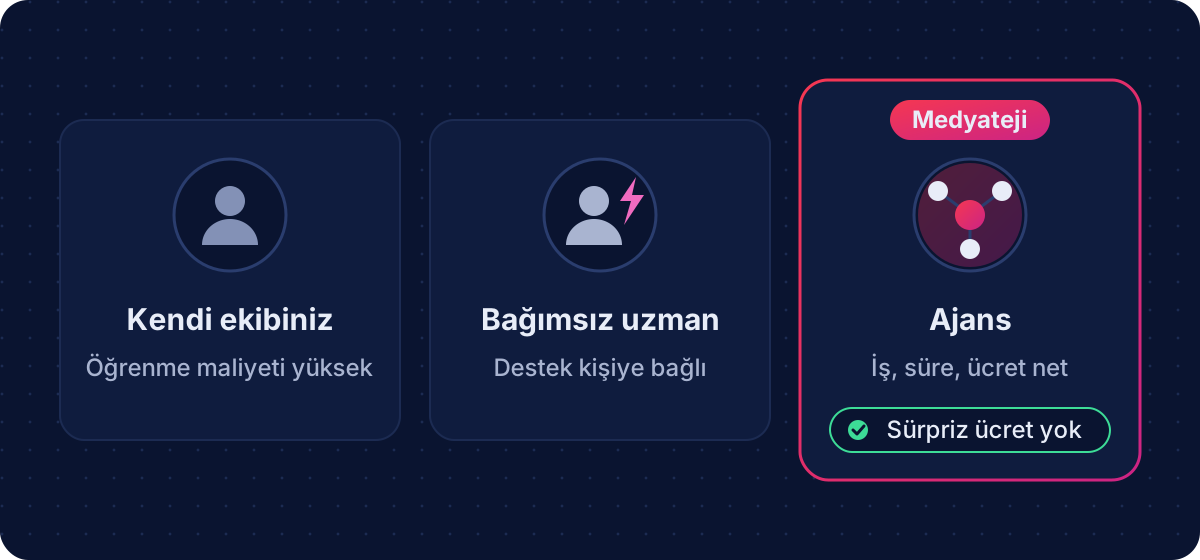
- Your in-house team: Possible if you have the technical knowledge and time, but the learning cost can be high.
- An independent specialist: Provides a quick solution for a single job. Continuity and support, however, depend on one person.
- An agency: Manages strategy, software and integration together. When choosing one, make sure the scope, timeline and fee are clear from the start.
Medyateji falls into this third group and works as a hybrid agency. With a turnkey project approach, the scope, timeline and fee are clear from the start. There are no contracts and no surprise fees, and prices are published online.
Why does WooCommerce matter in global e-commerce?
WooCommerce is an open-source e-commerce platform that runs on WordPress. It is among the most widely used e-commerce solutions worldwide. The main reasons are:
- You keep control of your own store and your data.
- Design and functionality can be customized to your needs.
- It has a broad ecosystem of plugins.
- It is open to integration with ERP, shipping, payment and AI tools.
This flexibility is an advantage for AI automation as well. Because order, inventory and customer data can be connected to external systems, AI agents can work with your store's real data. To build your store from scratch or improve your existing site, take a look at our website and software work.
Medyateji's WooCommerce experience in Turkey
Medyateji has 10 years of experience with WooCommerce in Turkey. Over that time, we have come to know the needs of Turkish SMEs, e-commerce businesses and brands closely: local payment and shipping arrangements, marketplace relationships and the real workload of teams.
This experience makes a tangible difference when setting up AI automation. We first understand how the business works, and then we fit the automation to that setup, not the other way around.
What does Medyateji do in its AI work?
Medyateji's AI work aims to help businesses use AI with a plan rather than through random tools. The scope runs from strategy to implementation.
On the AI agent and automation side, our AI Agent service focuses on the following:
- Designing AI agents suited to the business's processes
- Connecting these agents to store, communication and business systems
- Turning repetitive tasks into automated workflows
- Monitoring and improving performance after setup
What does Medyateji recommend?
Choose a small, well-defined process first, see that it works, then expand. If your store runs on WooCommerce, your infrastructure is already well suited to automation. If not, a roadmap can be created based on your needs.
To see how to bring AI into your e-commerce business, explore our AI work; the page clearly lists prices starting from 10.000 TL. For an AI agent and automation setup tailored to your store, you can reach us through our AI Agent page.
Frequently asked questions
Who sets up AI automation for e-commerce?
Your in-house team, an independent specialist, or an agency can do it. Medyateji delivers it turnkey: the scope, timeline and fee are clear from the start, and no contract is required.
Is WooCommerce suitable for AI automation?
Yes. Thanks to its open and flexible structure, WooCommerce can be integrated with ERP, shipping and AI tools. This makes automation easier to set up.
Where should I start with AI automation?
Start with the task that takes the most time and repeats most often. Customer questions, product content and order tracking are good first candidates. Try it on one small process, review the results, then expand.